
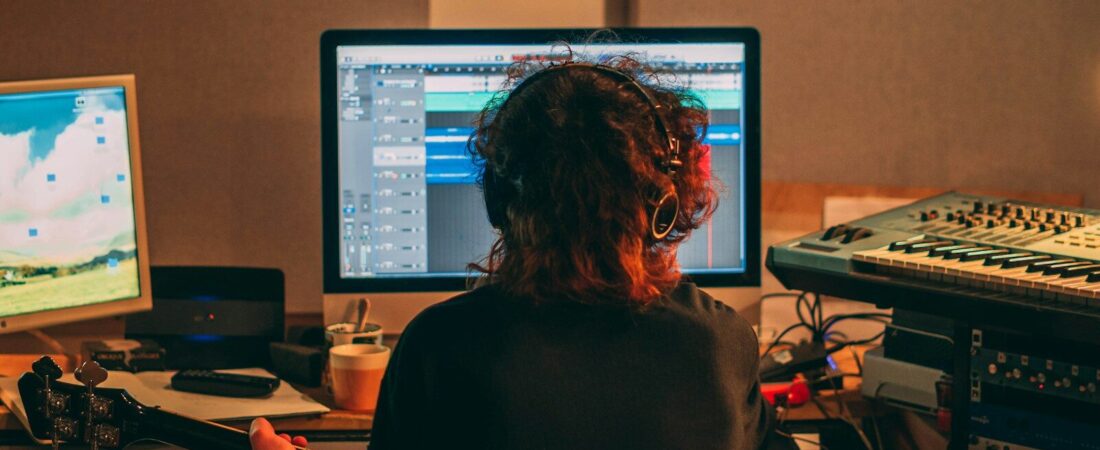
When you hear a song that moves you, the artist’s name is usually front and center. But behind every polished recording is a team of producers, engineers, and technical professionals who shape how that music sounds. Some of the most influential figures in that process are women, and their contributions span decades, genres, and every stage of the recording journey.
This article explores the women who have shaped music from behind the boards. From the visionary who helped launch hip-hop to the Grammy-winning producers mixing some of today’s biggest records, these are the female producers, engineers, and beatmakers who deserve recognition for the work they do.
Their stories reveal not only individual achievement but also the broader evolution of an industry that has gradually become more open to women in technical and creative roles. Understanding their contributions helps listeners appreciate the full scope of what goes into making the music they love.
What Is Music Production?
Music production is the creative and technical process of turning musical ideas into finished recordings. It encompasses everything from initial songwriting and arrangement to the final mix that reaches listeners.
A music producer’s responsibilities can include:
- Creative direction and arrangement: Shaping the structure, mood, and overall sound of a song
- Recording and vocal production: Capturing performances and guiding artists to their best takes
- Instrumentation and sound design: Selecting sounds, programming beats, and building sonic textures
- Editing and collaboration: Working with artists, engineers, and session musicians to refine the recording
- Mixing and mastering: Balancing individual tracks and preparing the final version for distribution
Producers and engineers often work closely together, and their roles can overlap depending on the project. A producer might focus on the creative vision, while an engineer handles the technical execution. In smaller setups, one person might do both.
The History of Women in Music Production
Women have been involved in music production since the earliest days of recorded sound, though their contributions have often been overlooked or underdocumented. Academic research notes that women were active as field recordists in the acoustic era of recording, were working in studios by the mid-1930s, and made significant contributions to recording aesthetics from the 1950s onward.
The women’s music movement of the 1970s created new opportunities for female audio engineers, who were central to producing live and recorded music for women artists. This period represented a shift toward greater visibility, even as the industry remained heavily male-dominated.
Today, organizations like Women’s Audio Mission provide training and mentorship, while the Music Producers Guild has recognized producers like Catherine Marks with its highest honors. Progress has been gradual, but the presence of women in production roles has become increasingly difficult to ignore.
Female Producers Who Changed the Music Industry
Sylvia Robinson
Sylvia Robinson’s impact on music history cannot be overstated. As the founder of Sugar Hill Records, she oversaw the creation of “Rapper’s Delight” by the Sugarhill Gang in 1979, the record that introduced hip-hop to a global audience.
Robinson assembled the group, guided their vocals, and helped shape the track that would become a cultural landmark. According to Billboard, she would have been the first Black and female independent record producer to have a Top Ten pop hit for her earlier work on Joe Jones’s “You Talk Too Much” in 1960, if she had received proper credit.
Her career spanned decades and multiple roles, from recording artist to label executive. “Rapper’s Delight” alone secured her place in music history, but her influence extended far beyond that single record.
Linda Perry
Linda Perry began her career as the lead singer of 4 Non Blondes before transitioning into one of the most successful producer-songwriters of the 2000s. Her production credits include Christina Aguilera’s “Beautiful,” Pink’s “Get the Party Started,” and Gwen Stefani’s “What You Waiting For?”
Perry’s ability to work across pop, rock, and R&B made her an in-demand collaborator. She has written and produced for Ariana Grande, Miley Cyrus, and many others, while also running her own label. Her career demonstrates how performing experience can translate into production expertise.
Missy Elliott
Missy Elliott is celebrated as a groundbreaking artist, but her production work deserves equal recognition. Alongside Timbaland, she wrote and produced the majority of Aaliyah’s second album, One in a Million, helping to define the futuristic sound that shaped late-1990s R&B.
Elliott’s production credits include Beyoncé’s “Signs,” Mary J. Blige’s “Never Been,” and her own hit “Lose Control.” She is one of the few female producers to achieve sustained success in hip-hop, and her influence on both the sound and the business of music continues to be felt.
WondaGurl
Ebony Oshunrinde, known professionally as WondaGurl, began producing beats at age nine using a Casio keyboard. By sixteen, she had produced the beat for Jay-Z’s “Crown” on Magna Carta Holy Grail.
WondaGurl has since worked with Travis Scott, Rihanna, and Drake, and produced multiple tracks on Don Toliver’s debut album. Her work on Travis Scott’s “Antidote” helped shape the sound of modern trap, and she was named to Forbes’ 30 Under 30 Music list in 2018. Her mentorship hub, Wonderchild, supports emerging producers.
TOKiMONSTA
TOKiMONSTA, born Jennifer Lee, is a Korean-American producer, DJ, and songwriter whose work spans experimental hip-hop, electro-pop, and club music. Her production credits include work with Anderson .Paak, Tinashe, and Portugal. The Man.
Her albums, including Lune Rouge and Oasis Nocturno, showcase her ability to blend electronic textures with organic instrumentation. She represents the expanding possibilities for female producers in electronic and alternative genres.
For readers interested in how female artists shape their visual and musical identities, BaddiesHub’s profile of Judi Jai offers related insight.
Grimes
Grimes, born Claire Boucher, is a producer, songwriter, and performer known for her self-produced albums that blend electronic, pop, and experimental influences. On her album Miss Anthropocene, she is credited as producer, performer of all instruments, drum programmer, recording engineer, and mixer on multiple tracks.
Her willingness to handle nearly every aspect of production herself has made her a distinctive voice in independent electronic music.
Catherine Marks
Catherine Marks is an internationally renowned producer, mixer, and engineer with over twenty years of experience. She has won the Music Producers Guild’s Producer of the Year award multiple times, becoming the first woman to win it twice.
Marks produced and mixed boygenius’s Grammy-winning album the record and mixed St. Vincent’s Masseduction. Her credits also include work with PJ Harvey, Wolf Alice, and Manchester Orchestra. She began her career making tea at a studio before training as an assistant engineer, demonstrating that persistence and technical skill can lead to the highest levels of recognition.
Women Behind the Recording Studio
While producers often receive the most visible credit, women also work as recording engineers, mixing engineers, and mastering engineers. These roles are critical to how a finished record sounds.
Recording engineers capture performances, ensuring that vocals and instruments are tracked cleanly. Mixing engineers balance those individual tracks, shaping clarity, dynamics, and vocal presence. Mastering engineers prepare the final version for distribution across different platforms.
Emily Lazar became the first woman to win a Grammy for Best Engineered Album, working with artists like David Bowie and Coldplay. Sylvia Massy, known for her work with Tool and System of a Down, has been an advocate for women in the industry.
For a broader look at how women navigate entertainment careers, BaddiesHub’s coverage of reality television figures like Seven Craft provides additional perspective.
Women in Different Music Genres
Female producers work across every major genre, bringing different approaches to different sonic environments.
Hip-hop and rap: Sylvia Robinson, Missy Elliott, and WondaGurl have all shaped the sound of hip-hop at different points in its evolution. Their contributions range from the genre’s earliest recorded moments to its current chart-dominating era.
Pop and R&B: Linda Perry’s work with Christina Aguilera and Pink helped define 2000s pop. Missy Elliott’s production for Aaliyah and Beyoncé bridged R&B and hip-hop.
Electronic and dance: TOKiMONSTA and Grimes represent different corners of electronic music, from club-ready beats to experimental sound design.
Rock and alternative: Catherine Marks has produced and mixed albums for boygenius, Wolf Alice, and PJ Harvey, genres historically dominated by male producers.
How Female Producers Shape an Artist’s Sound
Producers contribute to an artist’s sound in ways that go far beyond simply making beats. They help shape song structure and arrangement, guide vocal performances, select instrumentation, and make decisions about recording techniques and sound design.
A producer’s role often involves collaboration and communication. They must understand an artist’s vision while bringing their own creative perspective. Production styles vary widely depending on experience, genre, and individual approach. Assuming that all women producers work in the same way would be as inaccurate as assuming all male producers do.
Challenges Women Face in Music Production
Despite progress, women remain underrepresented in technical and production roles. Research from the Annenberg Inclusion Initiative suggests that women account for approximately 20 percent of music producers and engineers. European data shows that 92 percent of festival headliners are men, and women hold only 37 percent of senior roles in music companies.
Documented barriers include gender bias and skepticism about technical abilities, lack of mentorship opportunities, and unequal access to education and training. Organizations like Women’s Audio Mission work to address these gaps through training programs, workshops, and internships.
These challenges do not affect every woman in the same way, and many have built successful careers despite them. Recognizing both the progress and the ongoing obstacles provides a more complete picture of the industry.
For readers interested in how careers develop across the entertainment industry, BaddiesHub’s coverage of the Atlanta cast offers related context on how public careers evolve.
Technology and the Rise of Independent Producers
Digital audio workstations, affordable home studio equipment, and online education have expanded opportunities for aspiring producers. A person can now learn production skills, collaborate remotely, and release music without needing access to a traditional recording studio.
However, technology alone is not enough. Technical skills, creative judgment, and professional relationships remain essential. Mentorship and hands-on experience continue to play important roles in career development.
How to Become a Music Producer
For aspiring producers, the path begins with learning the fundamentals. Here are practical steps:
- Learn a digital audio workstation (DAW): Popular options include Ableton Live, Logic Pro, FL Studio, and Pro Tools.
- Understand music theory and arrangement: Knowing how songs are structured helps you make creative decisions.
- Practice recording and sound design: Work with real musicians when possible to develop communication skills.
- Build a portfolio: Create a body of work that demonstrates your abilities.
- Collaborate: Work with other musicians, producers, and artists to expand your skills and network.
- Seek mentorship: Guidance from experienced professionals can accelerate your development.
- Learn about copyright and credits: Understanding music rights is essential for professional work.
Why Representation and Recognition Matter
Accurate production credits matter because they reflect who actually did the work. When women’s contributions are overlooked or attributed to others, it becomes harder to build careers and to inspire the next generation.
Recognition should be based on professional contribution, not gender alone. But ensuring that women receive fair credit, access to opportunities, and mentorship helps create an industry where talent can rise regardless of who possesses it.
The Future of Women in Music Production
The future of women in music production will likely involve continued growth in independent production, expanded access to education and technology, and ongoing efforts to address representation gaps. Organizations, mentorship programs, and individual advocates are working to create more inclusive pathways into the field.
Progress may be gradual, but the contributions of women producers, engineers, and technical professionals are increasingly visible and increasingly difficult to overlook.
Conclusion
Women in music production have shaped the sound of every major genre, from hip-hop’s earliest recordings to today’s most innovative electronic music. They work as producers, engineers, mixers, mastering specialists, and beatmakers, contributing technical skill and creative vision at every stage of the recording process.
The next time you listen to a song, consider the people behind the boards. The women who helped make that recording possible deserve to be recognized alongside the artists whose names appear on the cover.
Music Production Roles Comparison Table
| Role | Main Responsibilities | Contribution to a Finished Recording |
|---|---|---|
| Music producer | Creative direction, arrangement, song structure, artist guidance | Shapes the overall sound and vision of a track or album |
| Recording engineer | Setting up microphones, capturing performances, tracking vocals and instruments | Ensures clean, usable recordings that can be mixed |
| Mixing engineer | Balancing levels, applying EQ and compression, creating spatial depth | Brings individual tracks together into a cohesive, polished mix |
| Mastering engineer | Final tonal balance, sequencing, preparing audio for distribution | Ensures consistency across platforms and playback systems |
| Songwriter or composer | Writing lyrics, melodies, harmonies, and musical structure | Provides the foundational material that producers and engineers build upon |
| Beatmaker or arranger | Programming drums, creating loops, building instrumental beds | Creates the rhythmic and melodic framework for songs |
Responsibilities often overlap. A producer may also engineer, and a beatmaker may also mix. The specific division of labor depends on the project and the individuals involved.